IWishThisExisted
A full-stack platform where ideas become open-source projects
Tech Stack
Overview
Most ideas die in group chats and forgotten notes. IWTE gives them a stage, a vote, a team, and a GitHub repo — so the best ones actually get built.
IWTE bridges the gap between "I wish this existed" and shipped software. Users pitch ideas, the community votes and comments, and top ideas convert into full project workspaces with GitHub integration, task boards, role-based contribution tracking, and semantic search powered by pgvector.
The platform connects three core user archetypes: Makers who pitch ideas, Project Maintainers who coordinate tasks and recruit collaborators, and Contributors who claim work, ship PRs, and earn reputation. Every merged contribution builds your public track record — your reputation follows you, not just your commits.
Screenshots
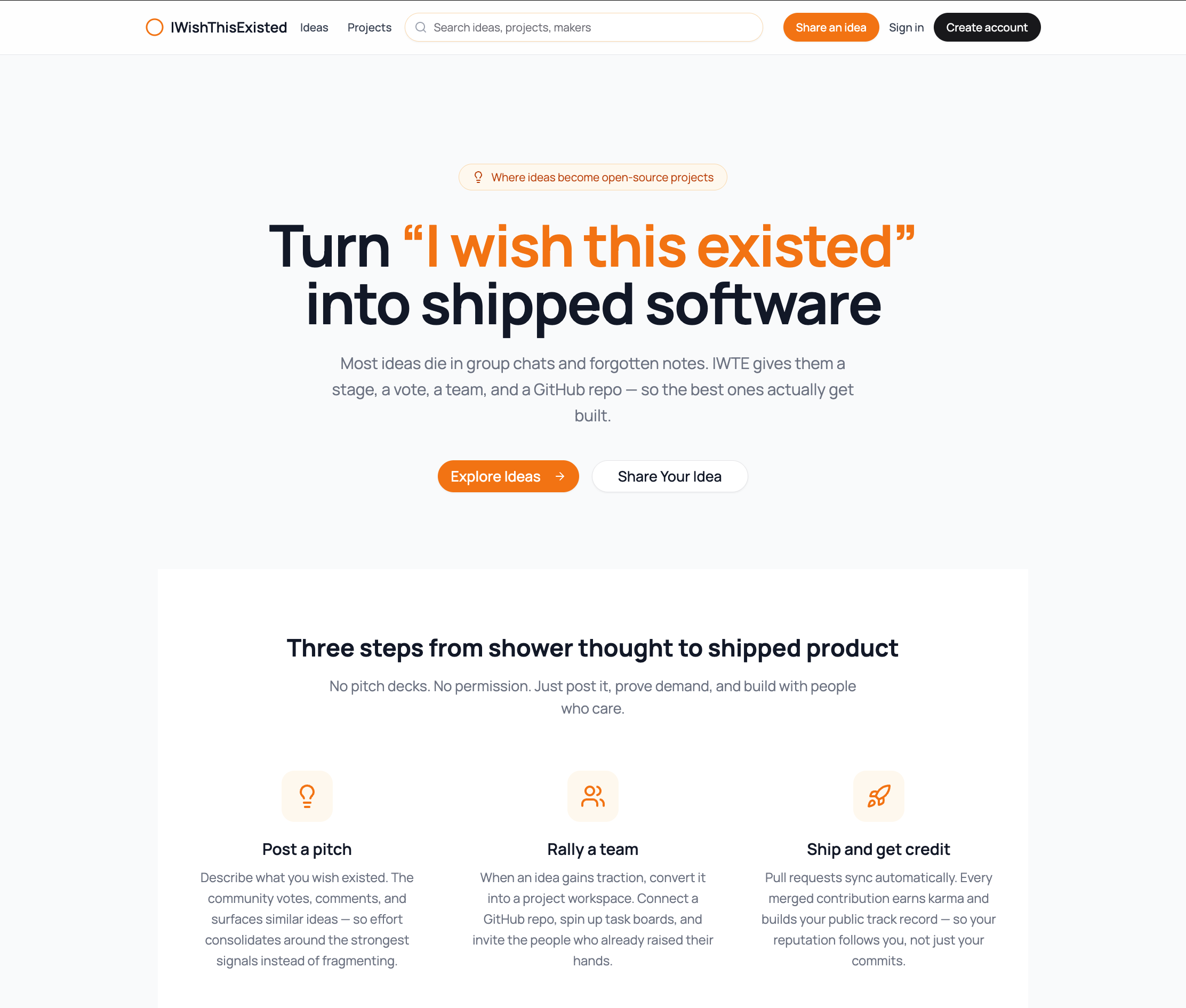
Landing page — Turn ideas into shipped software
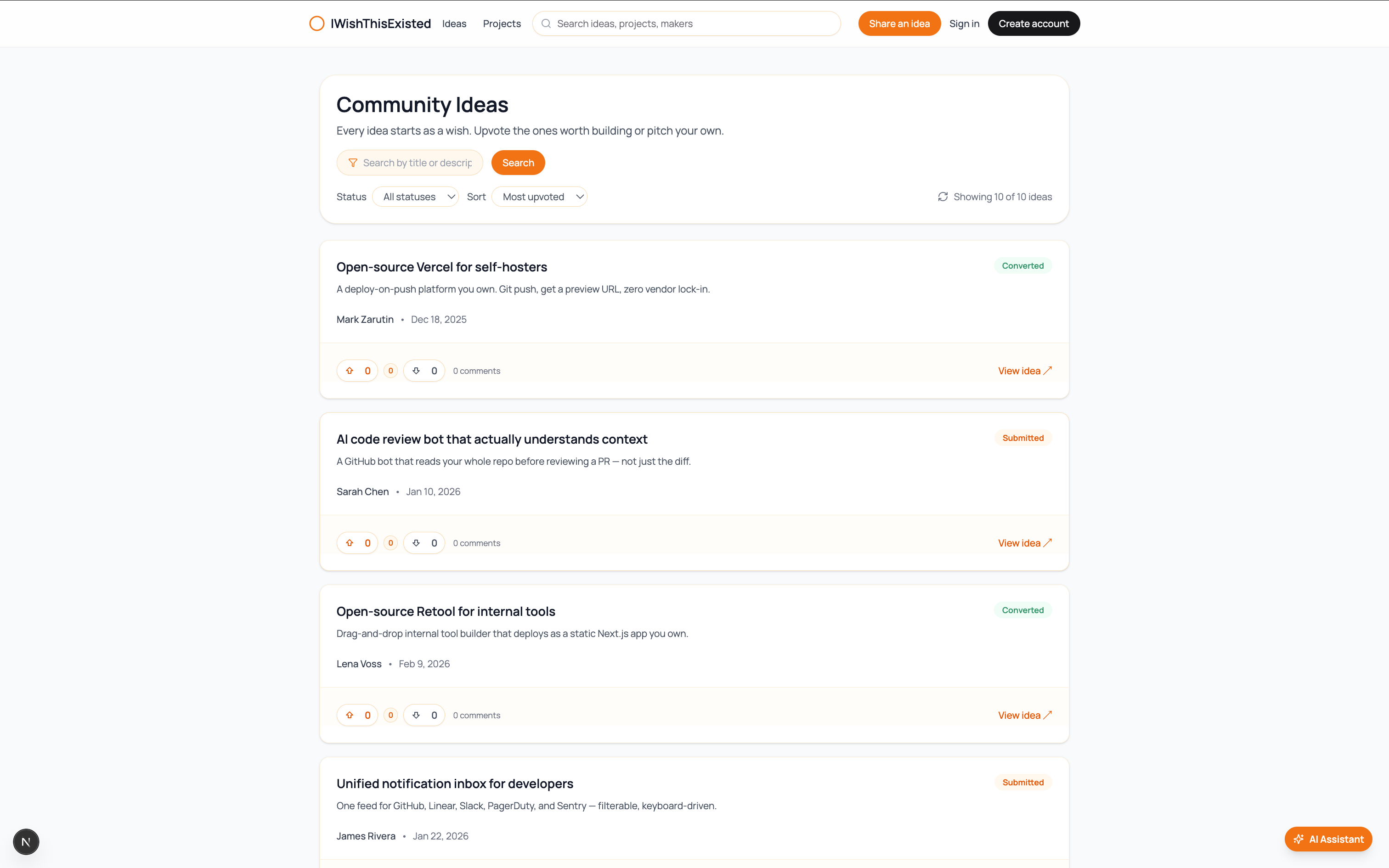
Idea Lab — Community-ranked pitches with voting
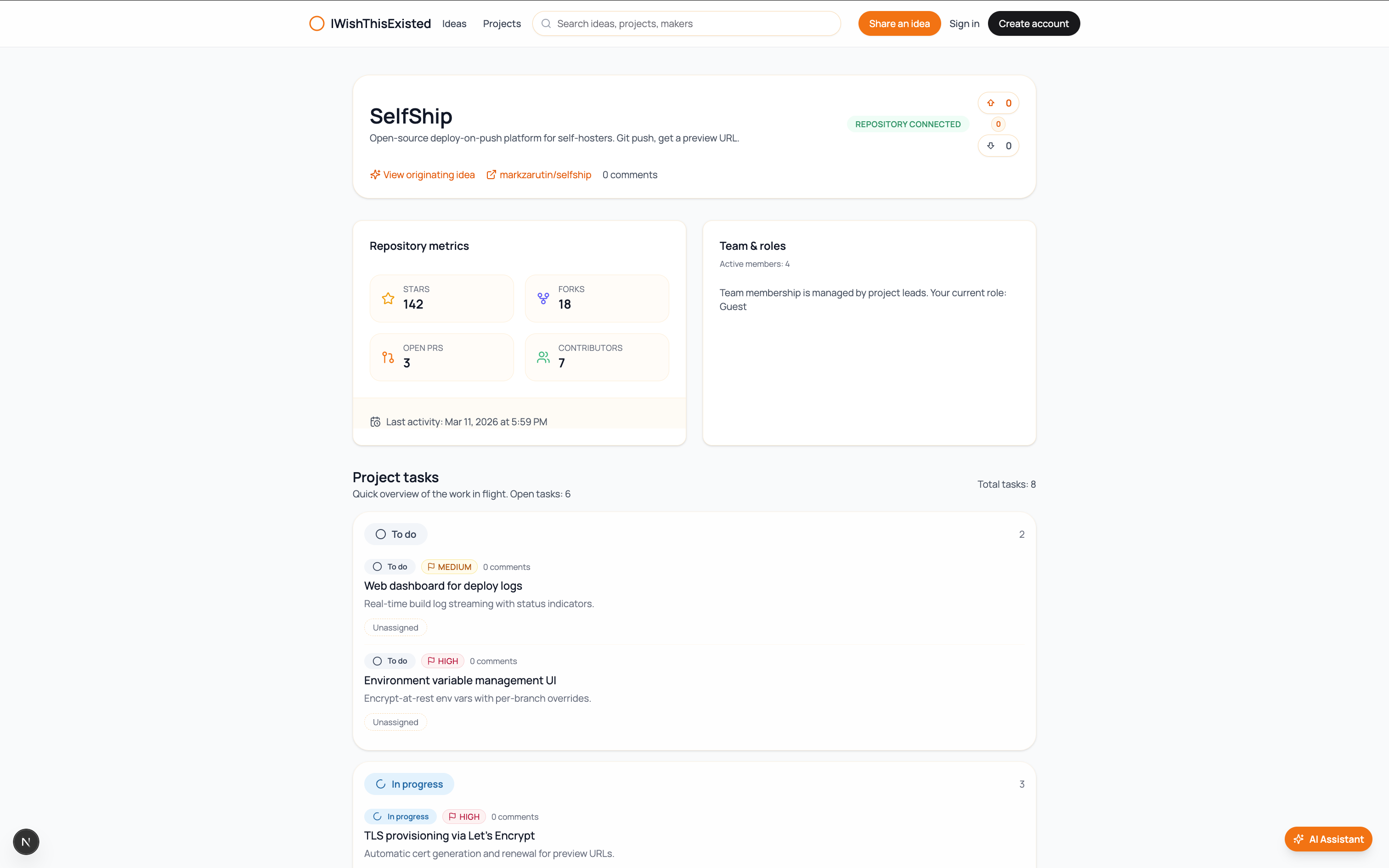
Project workspace — Metrics, tasks, and activity
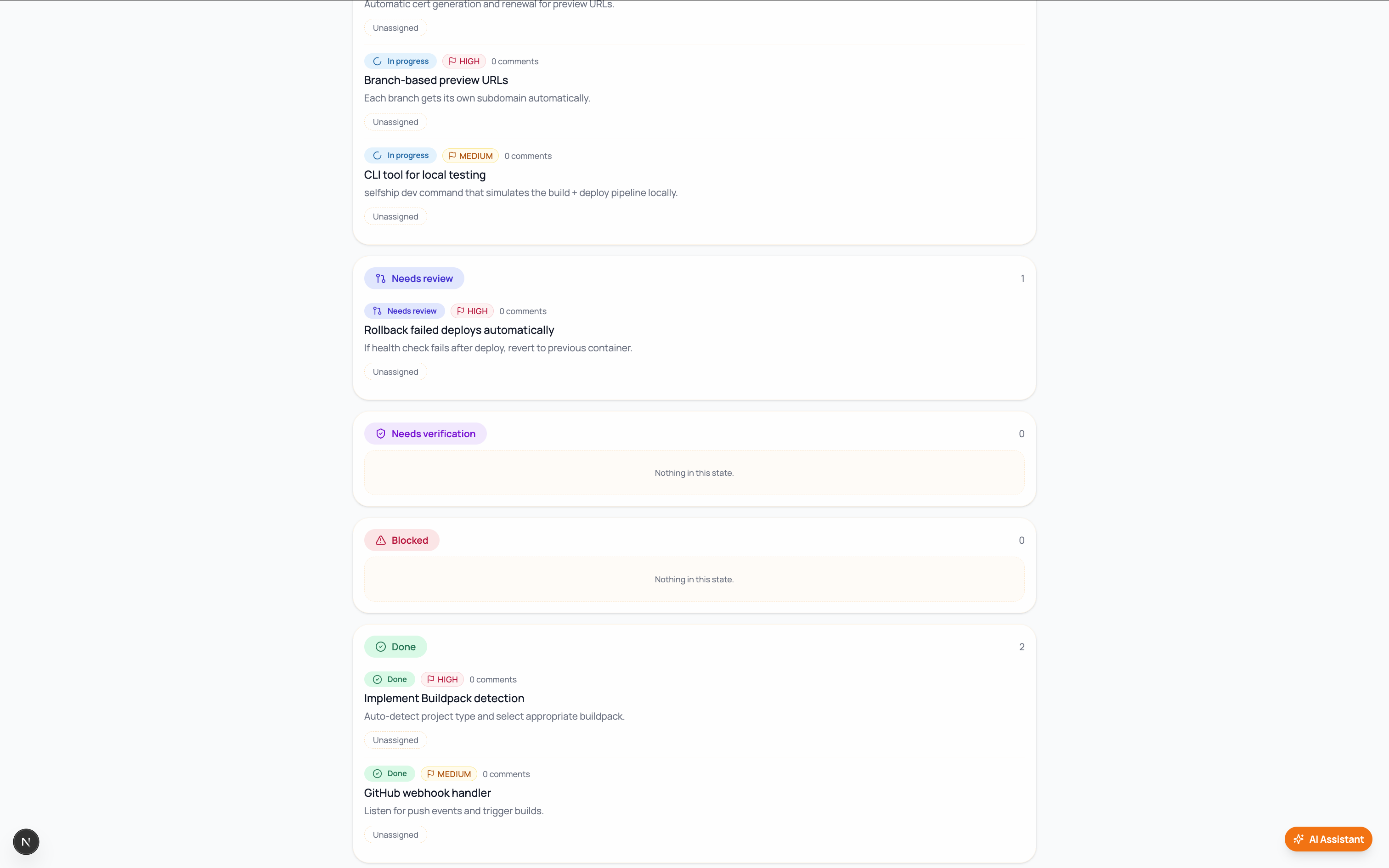
Task board — Status swimlanes with priorities
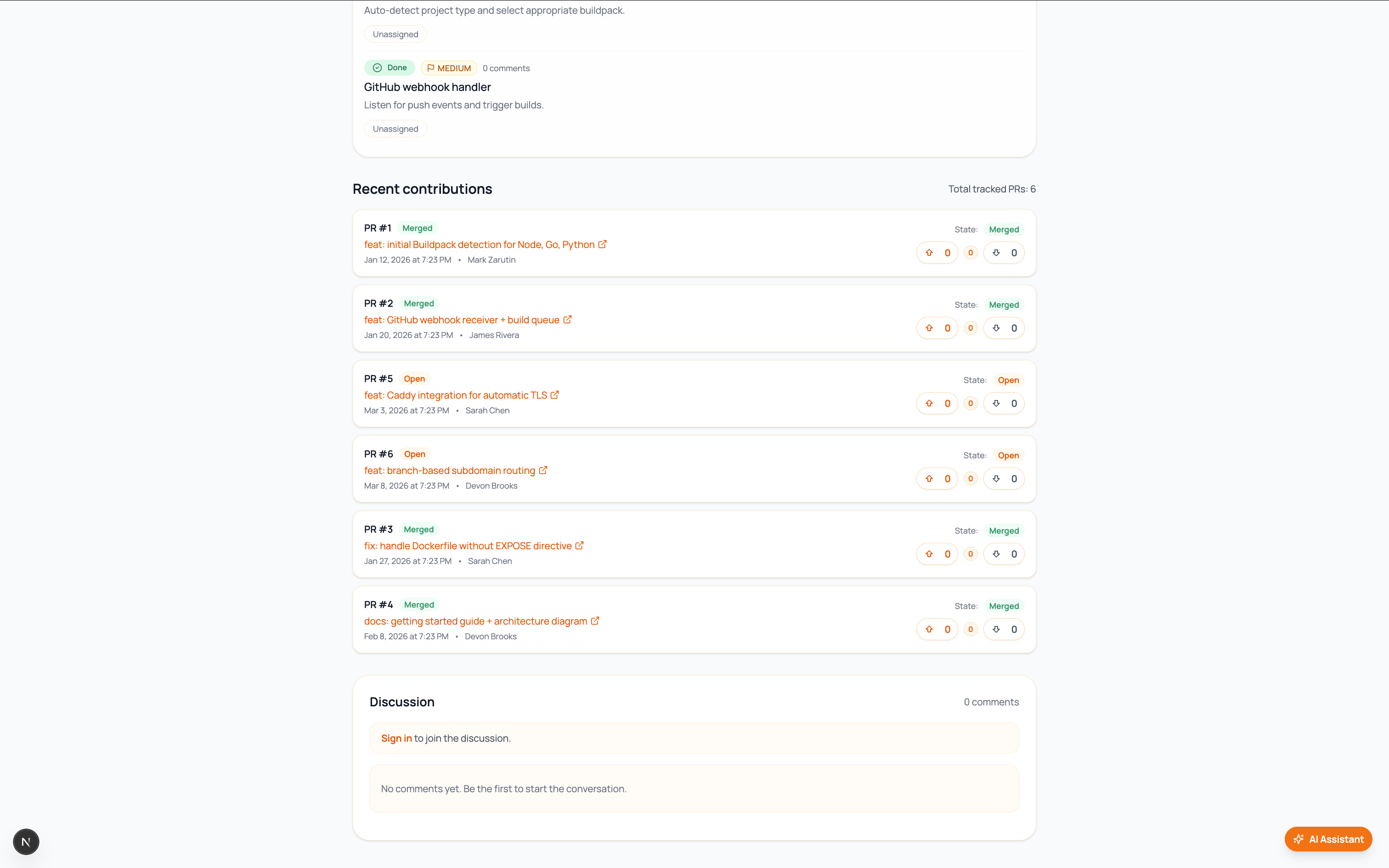
Contributions — Synced PRs with merge status
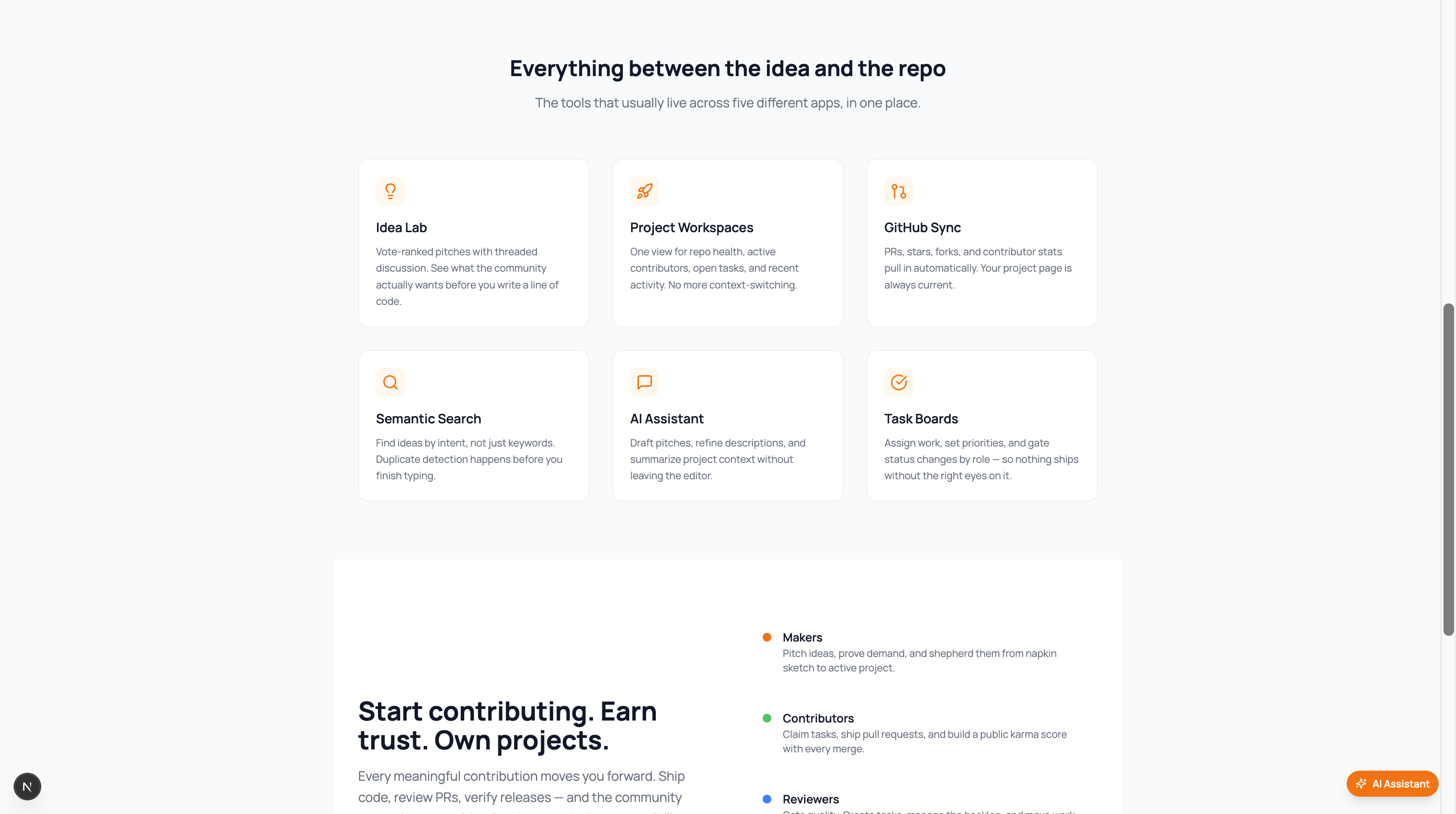
Three steps from idea to shipped product
Key Features
Idea Lab
Vote-ranked pitches with threaded discussion, markdown support, and semantic duplicate detection via pgvector embeddings.
Project Workspaces
Repo health (stars, forks, open PRs), contributor roster, task boards, and activity feeds — all in one view.
GitHub Sync
PRs, stars, forks, and contributor stats pull in automatically. Merged contributions are tracked and credited.
AI Assistant
Context-aware chat integrated into forms — draft pitches, refine descriptions, summarize project context. Supports both local (Ollama) and cloud (OpenRouter) LLMs.
Role Progression
Maker → Contributor → Reviewer → Owner, earned through shipped work. Karma accumulates from merged contributions.
Semantic Search
pgvector-powered search by intent, not just keywords. Find similar ideas, related projects, and matching contributors.
Architecture
The backend is a layered FastAPI application (Routes → Services → CRUD → Database) with 25+ domain models built on SQLModel. The frontend is a Next.js 15 App Router application with TypeScript, Shadcn/Radix UI components, and SWR for data fetching.
Key architectural decisions include pgvector for semantic search (eliminating keyword-search brittleness), a provider abstraction layer for LLMs (supporting both local and cloud models), and GitHub OAuth for frictionless contributor identity. The entire stack runs locally via Docker Compose with PostgreSQL, Redis, and Mailcatcher.